
"Madagascar coffee decline"
40 article(s) found

Coffee acreage in Madagascar continues to decline
Due to the continuous decline in coffee prices in the international market, the planting area of Malagasy coffee continues to decrease. The latest statistics from the Malaysian Ministry of Agriculture show that the planting area of Malagasy coffee is 190000 hectares, nearly 30,000 hectares less than 20 years ago. At present, coffee is still an important export product for horses. Malaysia produces an average of 67000 tons of coffee a year, with nearly 40000 tons for export. An important export of Malaysian coffee
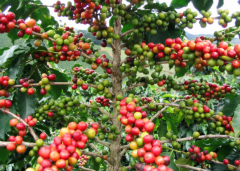
Madagascar Coffee Industry
Madagascar-An African island nation located in the southwestern Indian Ocean, it is the fourth largest island in the world. The strange baobab trees here have long been known to the world. Because Madagascar is made entirely of volcanic rocks, it has also become a paradise for coffee trees. Since 1970, coffee cultivation in Madagascar has remained at around 200,000 hectares with an average yield of 80,000 tons.
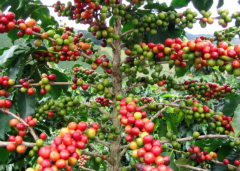
Coffee Industry Coffee Information in Madagascar
Madagascar, an African island country in the southwestern Indian Ocean, is the fourth largest island in the world. The peculiar baobab here has long been known to the world. Because Madagascar is made up entirely of volcanic rocks, it has also become a paradise for coffee trees. Since 1970, the planting area of Malagasy coffee has been maintained at about 200000 hectares, with an average yield of 80, 000 tons.

A brief history of Malagasy coffee. Malagasy organic coffee without organic verification.
When it comes to Madagascar, we may first think of our favorite animal cartoons, but Qianjie Coffee is going to talk about its coffee today. How did Malagasy coffee spread to Madagascar? Does it play an important role in society? What is the uniqueness of their coffee culture? Madagascar is an island country in the Indian Ocean and the fourth largest island country in the world. 88 million

Malagasy coffee has a balance of sour and sweet.
Madagascar is a floating country in the Indian Ocean of Africa and is the fourth largest island in the world. The island is 1.6 times the size of Japan. Independence from France in 1960. It is said to be the smallest continent in the world, with its own flora and fauna, and a treasure trove of biodiversity. Arabica coffee from Madagascar is a type of bourbon, which was introduced by French missionaries in the mid-19th century.

Madagascar is basically the producer of Robbins coffee, commercial coffee beans.
The term "fine coffee" was first put forward by Ms. Knudsen of the United States in Coffee and Tea magazine. At that time, Ms. Knudsen, as a coffee buyer at B.C. Ireland in San Francisco, was very dissatisfied with the neglect of the quality of raw coffee in the industry, and even some big roasters mixed a large amount of Robesda beans in the comprehensive beans, so she put forward the concept of boutique coffee.

"Leaf Rust" attacks Coffee production capacity reduces, but Coffee Futures fall to a New low
Professional baristas Please follow the Coffee Workshop (official Wechat account cafe_style) for urban rookies who go to coffee chains such as Starbucks and COSTA every day, they often pay close attention to the prices of various cups of lattes, mochas and cappuccinos they often drink. As everyone knows, although the price of this cup of coffee does not change often, it can be used

A brief introduction to the History and Culture of the Origin and Development of slightly sour boutique Coffee in Jinchu Valley of Kenya
How did the French missionary bourbon come from? I believe many people will have great doubts about this. Cat Ye will popularize this French missionary bourbon species for you today. Let's first look at the island of Bourbon in eastern Madagascar on the east coast of Africa. In 1646, the island became a French colony and was named Bourbon to show off the power of the French Bourbon dynasty.

A detailed introduction to the establishment, historical origin and current situation of the International Coffee Organization
The International Coffee Organization is an intergovernmental organization founded in London in 1963. It is composed of coffee importers and exporters. The organization is responsible for implementing the International Coffee Convention and is committed to improving the situation of the world coffee industry through international cooperation. Organizational and functional editorial contributions the International Coffee Organization has made a special contribution to the world coffee industry through: (1) organizing regular high-level meetings
Introduction of Coffee from 53 Coffee producing areas in the World (3)
twenty-one. Venezuela oil was once considered the main export of Venezuela (Venezuela). Although coffee trees were introduced from Martinique in 1730 and Venezuela, coffee production was almost abandoned at the height of the oil industry. Recently, coffee plantations have begun to recover, with original Tipica and bourbon coffee trees and new plantations

Boutique Coffee introduction of 53 Coffee producing areas in the World 4
twenty-three. Angola, once a big coffee producer, exported 3.5 million bags of coffee a year in the mid-1970s, 98 per cent of which was Roberts (probably the best in Africa), but total production fell to 200000 bags in 1990. The best brands in Angola used to be Ambriz and Amborm.

Even coffee is exposed to capital chain tension quality shrinkage CMO Zhang Hongji response: false news!
Professional coffee knowledge exchange More coffee bean information Please pay attention to coffee workshop (Weixin Official Accounts cafe_style) Xinglianrui three coffee players someone left behind! Over the past year, the coffee war has succeeded in attracting attention. Starbucks accelerated its expansion in the Chinese market and launched delivery services jointly; Ruixing Coffee suffered a huge loss of more than 800 million yuan in the first nine months and a loss for the whole year
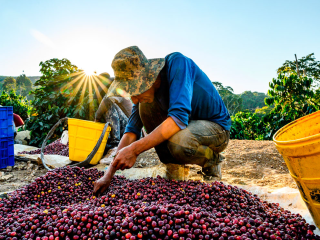
What kind of coffee beans is Kaddura? Introduction to the flavor characteristics of Caturra coffee beans made by hand
For more information on coffee beans, please follow the coffee workshop (Wechat official account cafe_style) Coffee belongs to the evergreen shrub of the genus Rubiaceae. There are about 125 species of plants under the genus Coffea, distributed in the subgenus Coffeae (25 in Africa and 55 in Madagascar).
Have a comprehensive understanding of coffee
Legend of Coffee the person who first discovered coffee: a shepherd in Ethiopia, in the fifth and sixth centuries AD. It is said that Niankadi, a shepherd with talent as a poet, herded sheep on the mountain paths of the Ethiopian plateau every day. He liked to drive the sheep home with a shrill flute, but one day the flute sounded again and there was no sign of the sheep. He looked everywhere. Find sheep
Practical explanation on the examination rules of roasting Coffee production license [GB]
The coffee tree belongs to the Rubiaceae. Out of a total of 73 varieties, only Arabica (Coffea ara-bica Linnaeus) and Canifera (Coffea canephora Pierre) are cultivated by humans. The remaining 71 varieties are wild, but of no value to growers.

World Map of Coffee beans-- introduction of 53 coffee producing areas in the world
twenty-one. Venezuela oil was once considered the main export of Venezuela (Venezuela). Although coffee trees were introduced from Martinique in 1730 and Venezuela, coffee production was almost abandoned at the height of the oil industry. Recently, coffee plantations have begun to recover, with original Tipica and bourbon coffee trees and new plantations

Practical explanation on the examination rules of roasted Coffee production license
First, the general situation of the development of the industry. Coffee tree belongs to Rubiaceae. Out of a total of 73 varieties, only Arabica (Coffea ara-bica Linnaeus) and Canifera (Coffea canephora Pierre) are cultivated by humans. The remaining 71 varieties are wild, but of no value to growers. The 200 varieties of Arabica include the previous varieties of Mocha, Bourbon and Horse.

Coffee bean varieties: the historical cause and classification of cocoa bean varieties are explained in detail.
Morphological characteristics of the trunk: up to 12 meters high, trees, wide branches, branchlets brown pubescent. The trunk is solid and the cacao trunk has a luxuriant crown. Leaves: alternate, elliptic, leathery, 20-30 cm long, slightly stellate hairy on veins. Flowers: old cauline flowers, blooming directly on the trunk or main branch, about 1.8 cm in diameter; Calyx pink, smelly. 5 deep cracks; petals 5, lower sunken helmets

Arabica coffee beans, what is the knowledge of coffee cold all over the world?
Professional coffee knowledge exchange for more information about coffee beans, please follow the coffee workshop (Wechat official account cafe_style) one. Costa Rican coffee has full grains, ideal acidity and unique strong aroma. Tarrazu of Costa Rica is one of the major coffee producing areas in the world. The volcanic soil in Costa Rica is very fat.

Which coffee beans are Arabica beans? what kinds of Arabica coffee are there and which ones taste better?
Professional coffee knowledge exchange more information about coffee beans please follow the coffee workshop (Wechat official account cafe_style) Arabica coffee category one. Costa Rican coffee has full grains, ideal acidity and unique strong aroma. Tarrazu of Costa Rica is one of the major coffee producing areas in the world. Costa Rica